Location: 3320 Peterson Rd, STE 104, Lawrence, KS 66049

Care Coordination: 785-371-1414

ADHD Assessment and Treatment

/
/
ADHD Assessment and Treatment

Integrative Treatment for ADHD

Family Psychological Service can help adults, teens, and children with ADHD build practical skills, improve frustration tolerance, maximize stimulant efficacy, and feel more confident in daily life.

Adults learn skills of organization, time management, emotional regulation, and follow-through, as well as strategies for managing work, relationships, and household responsibilities. Therapy can also address anxiety, depression, low self-esteem, or stress that may develops when ADHD has gone untreated or misunderstood.

For teens, our staff can provide support with school performance, motivation, impulse control, peer relationships, family communication, and planning for increasing independence. Clinicians may work with parents and schools to create consistent expectations, routines, and accommodations that help teens succeed. 

For children, treatment often includes behavior therapy, parent coaching, classroom collaboration, and tools that make tasks clear, structured, and rewarding. Families can learn how to use positive reinforcement, predictable routines, and calm discipline to support attention and behavior at home. 

Across all ages, Family Psychological Service can provide assessment, education, individualized treatment planning, and coordination with medical or educational providers when appropriate. The goal is not to change who someone is, but to help each person understand ADHD, use their strengths, and develop skills that make everyday life easier.


Bored, thinking and student with girl in classroom for education, learning disorder and future. Problem solving, mental health and reflection with child with adhd in school for studying and idea
Child Assessment and Treatment
Young woman with worried stressed face expression with illustration
Adult Treatment
Child feeling anxious or shy, receiving comfort from a psychologist. Mother observing during a family counseling session
Parent-Child Therapy
Sofa, business people and stress with laptop for debt, company bankruptcy or mistake. Man, woman or colleagues in office with anxiety, budget project and frustrated for deadline or financial crisis
Couples Therapy
Middle aged Caucasian woman with ponytail sitting and writing in notebook while observing senior woman with headscarf completing psychological assessment in office setting
Five Session ADHD Assessment for Adults
Medication Management and Education. A caregiver talks to an elderly woman about her medication during a home visit.
Medication Management
Bored student distracting playing with eyeglasses at home
Academic Support and Accommodation

Five Session ADHD Evaluation For Adults

Consistent with research suggesting that ADHD is often not “overdiagnosed” but rather poorly diagnosed, we do not offer a one- or two-session process for ADHD assessment. Clients seeking ADHD treatment will undergo a comprehensive diagnostic evaluation, and if indicated, will receive both therapy and medication management to support the best possible outcomes. For adults who only require an assessment to share with their primary care provider or another clinician, we offer a dedicated Five Session ADHD Assessment Protocol.

Typically, the process begins with a 90-minute intake session to collect detailed information regarding previous school experiences, work life, relationships, and other factors that can influence or be affected by ADHD. In the second session, we review the results of the Conners Adult ADHD Rating Scale (CAARS), which is completed online by the client and, when possible, by others close to them. The CAARS is a norm-referenced, gold-standard tool for evaluating how ADHD symptoms impact daily life and functioning. If the assessment supports an ADHD diagnosis, clients are referred to one of our APRNs for a trial of medication.

After starting medication, clients meet three more times with the therapist evaluator to review the medication’s effects, identify challenging situations, and develop coping strategies to reduce the impact of ADHD symptoms in daily life.

Some clients find this process so beneficial that they choose to continue receiving medication and therapy through our clinic. The therapist evaluator may recommend ongoing care based on the summary of the five sessions, but the final decision is always with the client. Alternatively, clients may request a letter to their primary care physician and pursue further medication management elsewhere.

This Five Session ADHD assessment model has become increasingly popular among clients seeking a diagnosis, as it offers more than just a simple screening. By allowing time to thoroughly understand each individual and their unique circumstances, this approach increases the likelihood of reaching an accurate and helpful outcome. When ADHD is present, treatment can be a transformative next step; when it is not, avoiding unnecessary interventions saves time, money, and effort. This model aims to provide clear answers within a concise time frame.

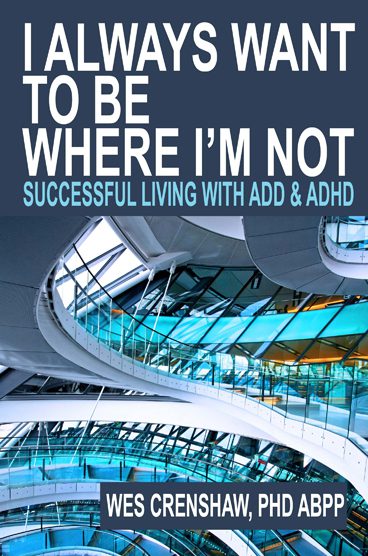
Purchase Dr. Wes Crenshaw's Books on ADHD on Amazon